
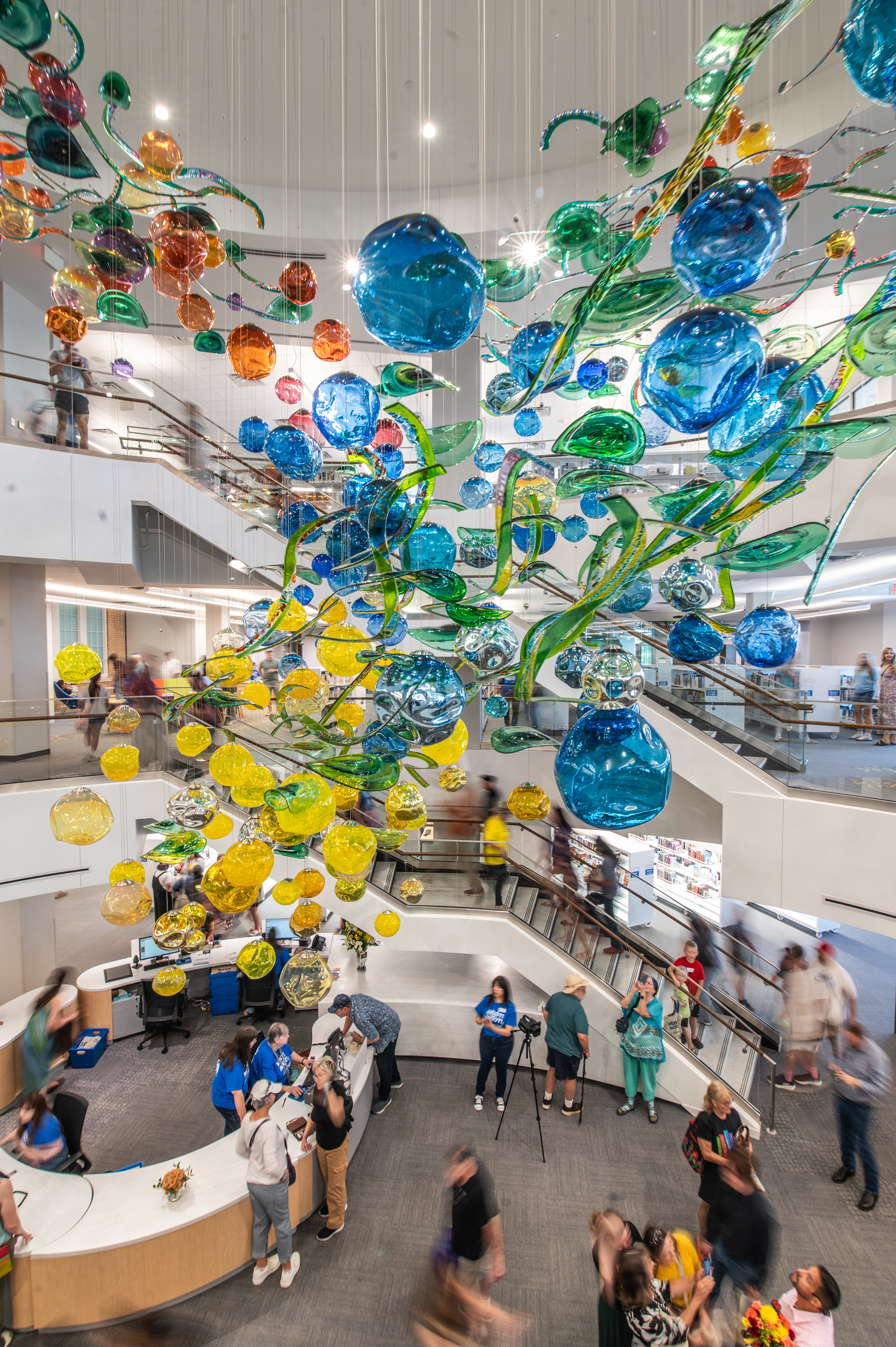
Cascading through the main public library in Abilene, Texas, 400 individual glass ribbons and bubbles in a rainbow of colors hang from the air. Artist Carlyn Ray created Gathered Radiance (2026) with members of the Abilene community as a site-specific public-art project at the Abilene Public Library on the city's cultural campus known as Abilene Heritage Square.
As a 7th grader at the Episcopal School of Dallas, Carlyn Ray listened to a "chapel talk" about finding your path and purpose, and decided at that moment she would use her art to help others. She had already fallen in love with glass, and remembers “things kind of shifted, I wanted to use art to help others like myself. I wanted to use glass as a way of sharing light.”
In a video interview with Glass, Ray closed her eyes, gesticulating as she spoke about the creation of Gathered Radiance and the collaborative aspect of her art.
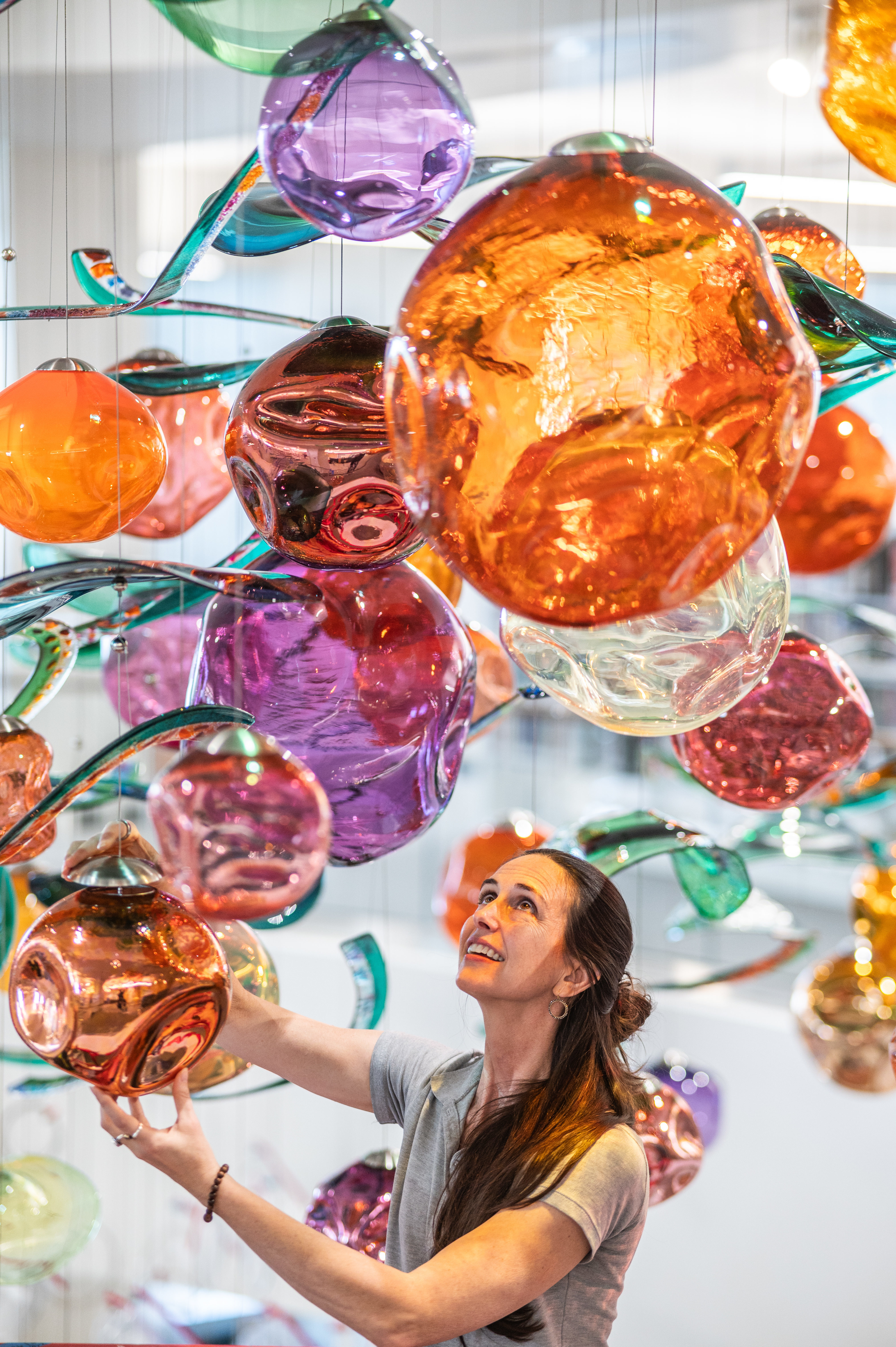
Glass Quarterly Hot Sheet: Can you share a bit about how you approach working with others in your art practice, and elaborate on what you mean when you talk about “creating opportunities” for collaboration in your approach to your recent public-art commission, Gathered Radiance?
Carlyn Ray: When I begin designing a piece, I don't start by thinking about how the public will contribute. I begin with the artwork itself: the movement, the light, the emotion, the way I want people to experience the space. I see the energy, the feeling, the flow of the installation long before it's made.
As I'm designing, I look for moments within that vision where I can thoughtfully invite others into the creative process. Those opportunities are never separate from the artwork; they're woven into its conception from the very beginning. Participation isn't added afterward; it becomes part of how the piece comes to life.
For Gathered Radiance, those moments became the glass ribbons that move throughout the sculpture. I wanted them to feel as though they were carrying the spirit of the community through the library. During my exhibition at The Grace Museum, I invited people into the museum to hear the story behind the work, experience the exhibition, and then step into my creative process by decorating the ribbons that would ultimately become part of the permanent installation.
To me, that's very different from simply asking the public to make art. I'm sharing my artistic vision and inviting people to help bring that vision to life. They're participating in the birth of the sculpture itself. Their hands become part of the making, while the overall composition, design, and artistic direction remain unified. The finished work carries both a singular artistic voice and the collective spirit of the people who call that place home.
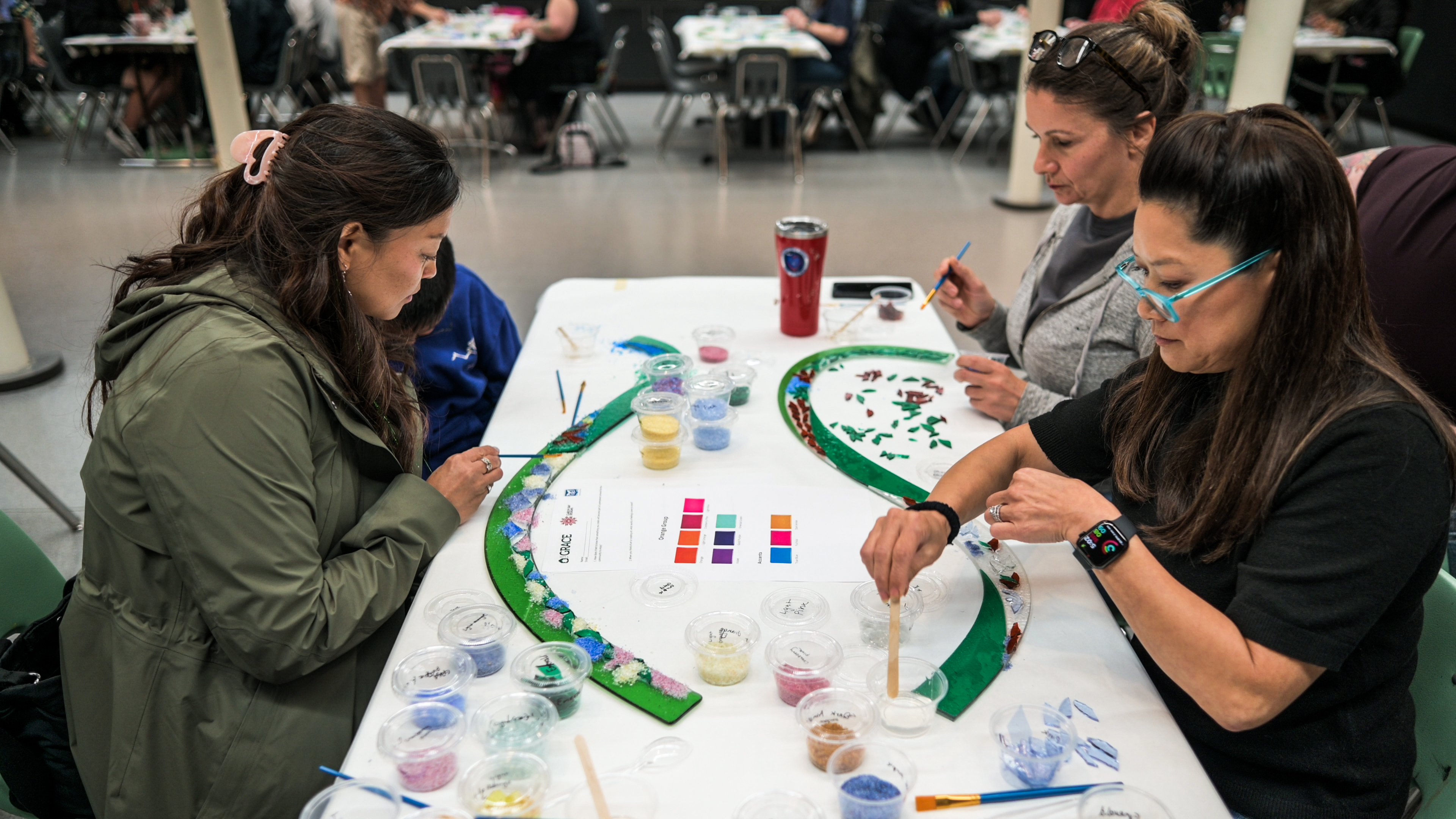
Glass: Could you describe the energy in the rooms where this collaboration was happening?
Ray: The energy was incredibly moving. There's a moment when people realize that what they're creating will become part of something permanent, something that will live in their community for generations, and you can almost see a light come on in their eyes.
We asked participants, "What makes Abilene special to you?" Their answers became part of the artwork. Some shared memories of loved ones who had passed away. Others celebrated their families, their faith, or meaningful places throughout the city. One participant created a trellis inspired by the railroad, honoring Abilene's beginnings. Every ribbon carried a story I could never have imagined on my own.
What I love most is that the meaning doesn't come from me assigning symbolism. It comes from the people who bring their own experiences, memories, and hopes into the work. Their stories become part of the sculpture's spirit. I think my own vulnerability also opens the door for theirs. I often share why I create, how glass transformed my life, and what creativity has meant to me personally. That honesty creates a safe space for others to open up. The workshops become much more than decorating glass; they become conversations, reflections, and moments of genuine human connection.
That feeling comes from my own experience working for Dale Chihuly. I remember helping create monumental installations and later encountering them in museums and public spaces. There was an incredible sense of pride in knowing, "I helped create that." I realized how meaningful that feeling was, and I began asking myself: How can I share that experience with others? Today, creating those opportunities has become an integral part of my artistic practice. It allows people to see themselves not simply as observers of art, but as participants in something larger than themselves.
Glass: How was the opening of the library and unveiling of the piece?
Ray: The unveiling was deeply emotional. Many participants immediately searched for the ribbon they had created. As they found their piece suspended high within the sculpture, there were tears, hugs, laughter, and long moments of simply standing together and looking up.
What moved me most wasn't just seeing the finished artwork; it was seeing people recognize themselves within it. They knew that a small part of their story had become part of something that will welcome visitors for generations. Their faces lit up as they watched family members, friends, and complete strangers admire the work, knowing that they had helped bring it into the world.
For me, those moments are the true completion of the artwork. The sculpture isn't finished when the last piece of glass is installed; it's finished when people begin to see themselves reflected within it. The connections formed during the workshops continue to live inside the installation, woven together through hundreds of individual stories into one shared expression of Abilene.
That's what I hope people experience when they encounter Gathered Radiance. They don't simply see a sculpture; they feel the presence of an entire community shining through it.