

For nearly three decades, the National Glass Centre in Sunderland, England, has stood on the banks of the River Wear as both a cultural landmark and a living tribute to one of Britain’s oldest crafts in a region that for centuries hosted a range of glass production that can be traced back to the Middle Ages. Now, as its final show approaches ahead of a planned closure in July 2026, the building’s story is no longer just about art and heritage, but a possible bittersweet final chapter in a two-year battle to save this British outpost for glass art.
Since it originally opened in 1998, the National Glass Centre has always been more than a museum. It has been a working space for artists, a teaching hub for students, and a free public venue connecting visitors to Sunderland’s past as a center for glassmaking. In 2024, the University of Sunderland, which operates the center, announced that the cost of repairing structural issues—particularly the roof—had become unsustainable. The university cited estimates as high as £45 million to repair the signature glass roof structure as the primary reason for the permanent closure, but critics of the plan dispute these figures. Some experts suggest repairs could cost closer to £8.3 million and could be completed in affordable phases, raising questions about whether closure is truly inevitable or a strategic choice.

The proposed closure has sparked widespread backlash, which has been covered in detail in the Glass Quarterly Hot Sheet. More than 40,000 people have signed petitions to save the glass center, while local campaign groups and politicians have rallied against what they see as the loss of a vital cultural anchor. The issue has crossed political lines, with local leaders calling for alternative solutions, from transferring ownership to forming a charitable trust, to keep the building open.
Against this backdrop, the current exhibition, entitled "The Graduates", feels less like a traditional exhibition and more like a collective farewell. Running from January to July 2026, the show brings together the work of more than 50 artists connected to the University of Sunderland’s Glass and Ceramics Department. These are not only emerging artists, but a cross generational community of graduates, tutors, and established figures whose careers have been shaped within the building itself.
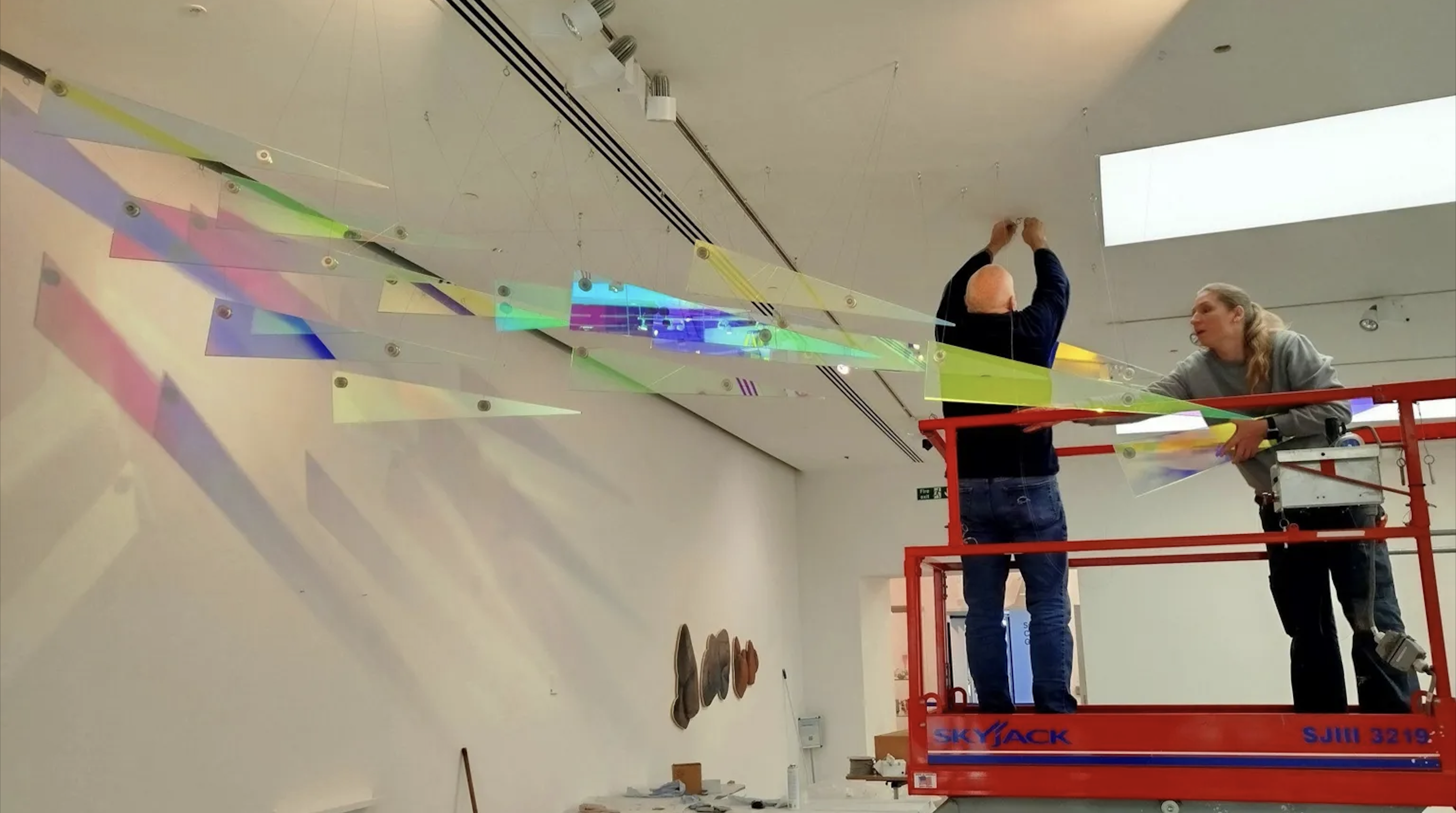
What makes "The Graduates" particularly powerful is its scope. It spans decades of practice, reflecting nearly 30 years of teaching, experimentation, and innovation in glass. Some artists are now internationally recognized, while others are just beginning, but all share a common origin point in the studios and furnaces of the Centre.
The result is a show that feels layered in time, where past, present, and future lay bare in the same space.

The exhibition also extends beyond the main galleries. Work by community groups, including Veterans in Crisis Sunderland, and contributions from PhD researchers are displayed in the Research and Learning Galleries. Together, they demonstrate the breadth of the Centre’s impact in training and sustaining Sunderland’s glassmaking community.
Many of the exhibiting artists describe the show as a full circle moment, a return to where their careers began, now reframed as a goodbye. For some, exhibiting here for the final time is both an honour and a loss, as the Centre has been central not only to their training, but to their identity as makers.
Others focus on the uncertainty ahead. Emerging artists, in particular, worry that the closure removes a rare and vital resource. The Centre was not just a gallery. It was one of the few places in the UK where artists could learn, experiment, and work with glass at scale. Without it, future generations may struggle to access the same opportunities.
"The Graduates" is ultimately a reflection of legacy, protest, and community sentiment. It captures the complexity of a moment where celebration and loss exist side by side.
The show will be on view until July 31, 2026, the date at which the National Glass Centre is scheduled to close.