
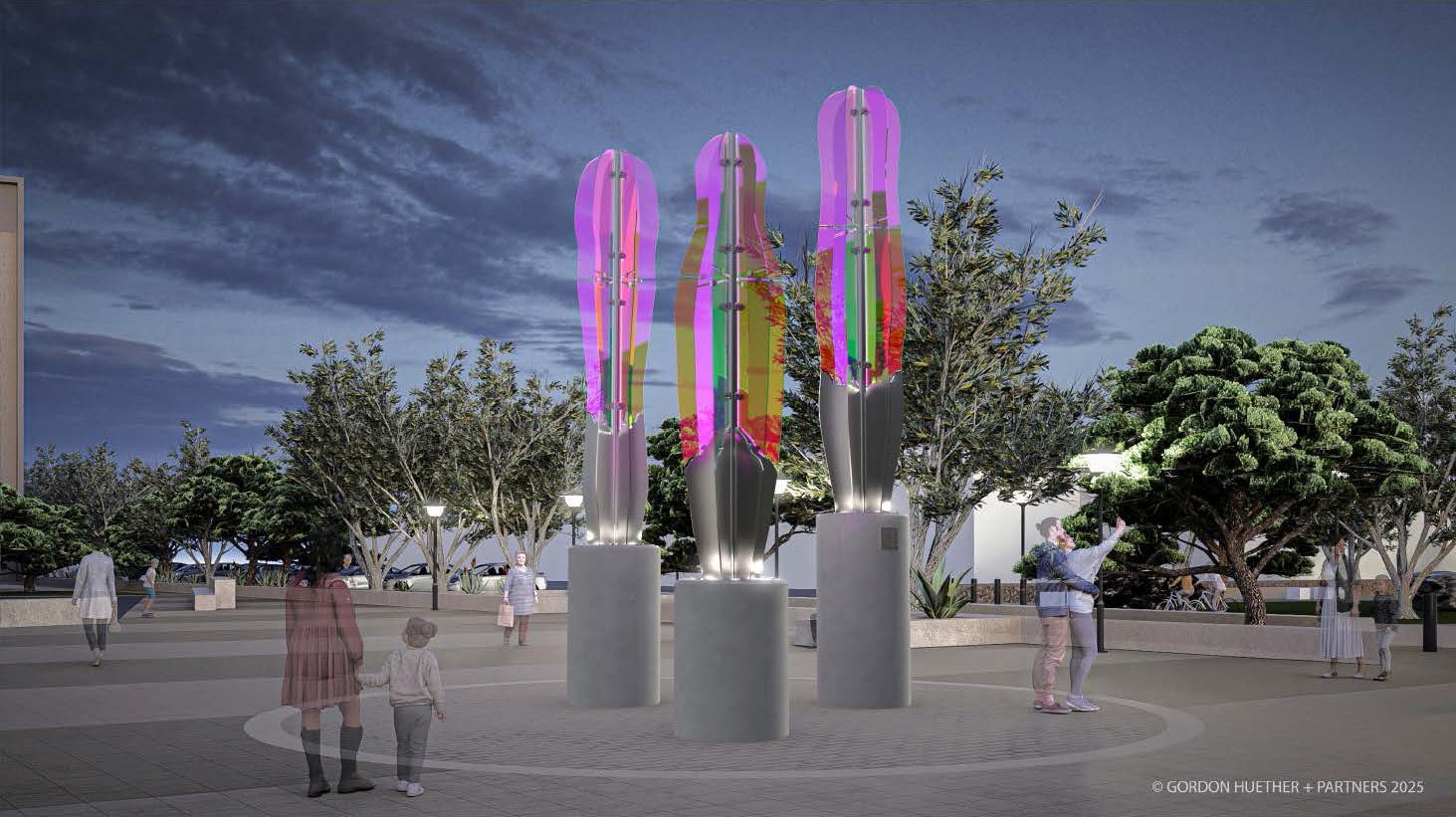
The magical interplay of glass and light has transfixed the human eye throughout history, but perhaps nothing can compare to the color-shifting properties of dichroic glass. Advances in science have explained how specific metal oxides encased or deposited on the surface can create a dramatic chromatic shift with even slight changes to the viewing angle (similar to when a thin film of oil or gas floats on top of a puddle of water), but when you actually witness the phenomenon in glass, explanation becomes irrelevant—the effect is absolutely captivating.
Alchemists in the Middle Ages tried mixing highly toxic metals and chemicals into molten glass in hopes of turning it to precious gold. This is likely the origin of the glass recipe of the Lycurgus Cup, a Roman cage cup that looks either red or green depending on whether it’s lit from behind or from the front. Dating to the fourth century CE, it remains one of the most impressive holdings of the British Museum, which only in 1950 was able to confirm it was dichroic glass and not some mysterious gemstone.
The word dichroic is derived from Ancient Greek, where “di” means "two" and “chros” means "color" or "complexion". Gold nanoparticles give the Lycurgus Cup its red color, silver particles are also suspended in the glass to create its green color. The dual colored effect is so mesmerizing that a cup of very similar description appears in an Ancient Greek novel.
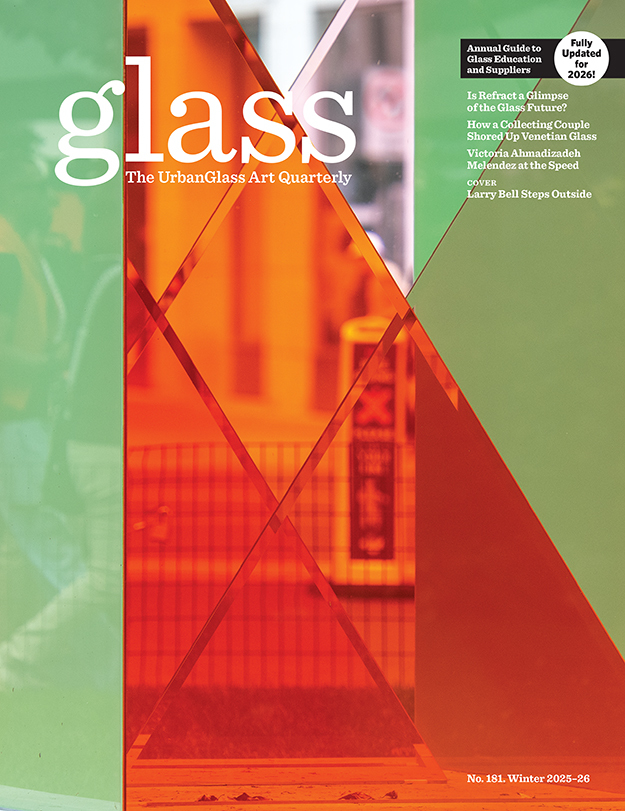
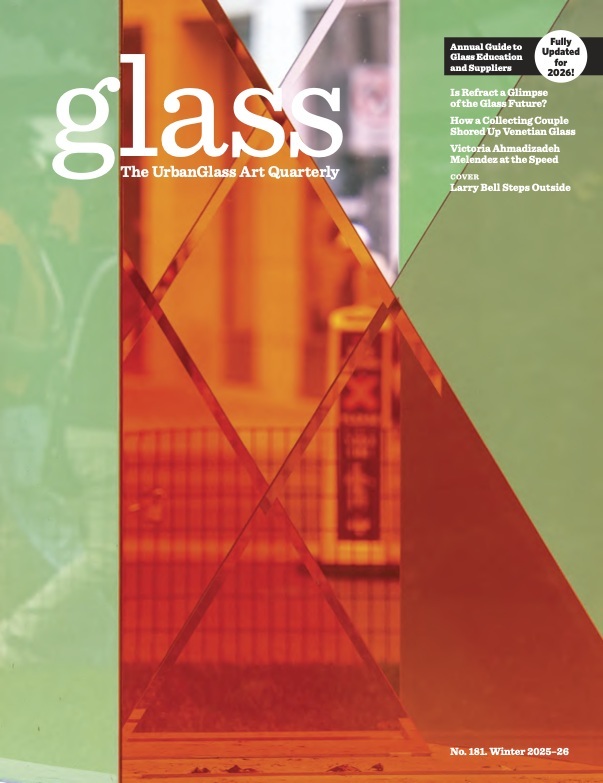
Today, dichroic glass continues to be used in art and design, and are seen in everything from Larry Bell’s geometric sculptures made using industrial thin-film deposition techniques—see the cover article in the Winter 2025 edition of Glass (#181)—to public artworks from Gordon Huether+Partners. The unique qualities of the material evoke metaphysical questions about existence and perception in the former, and, in the latter example, emphasize resilience in nature.
Last month, Huether installed Southside Saguaro Cactus at a regional Public Safety Complex in Tucson, Arizona. The public artwork was inspired by the Saguaro Cactus found in the Sonoran Desert of Arizona and the Sonoran region of Mexico, a plant which is notably resilient to the extreme climactic shifts in the Desert Southwest. Huether researched the spiritual and cultural importance of the Saguaro Cactus for Native tribes and chose to render a trio of cacti forms in his proposal. Two of the cacti are meant to represent the fire and police departments, with the third to represent the people of Tucson.
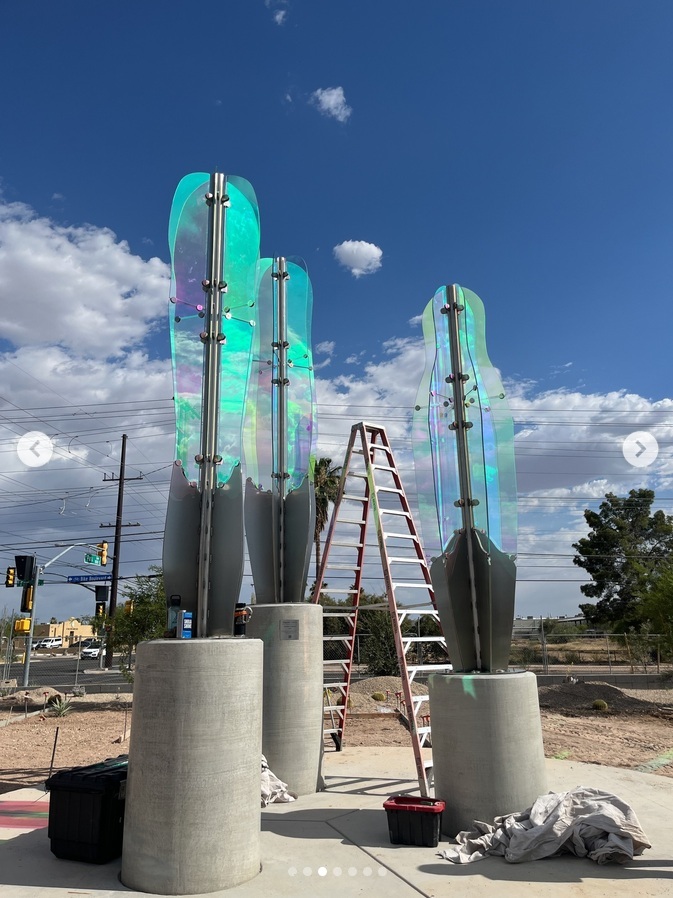
The resilience of the cactus is replicated in the choice of materials; the Southside Saguaro Cactus comprises three cacti made of dichroic glass, stainless steel, and concrete. A stainless steel rod connects the cylindrical concrete bases to the dichroic glass forms that make up the cactus. The project took two years to complete, Huether told the Glass Quarterly Hot Sheet, “From the time we [were] awarded the project to installation”
Huether told Glass Quarterly “We use dichroic glass fairly often as it’s such a dynamic material and works well with stainless steel.” Gordon Huether+Partners has used dichroic glass in other public art installations, like their Globussphäre 2009, Canyon Light 2018, and Barrel Cactus 2020.
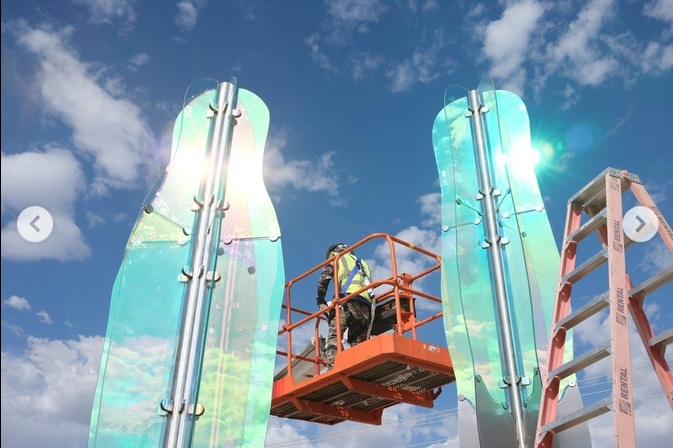
Dichroic glass has a mesmerizing color-shifting quality that depends on the viewing position and light. Apart from being beautiful, the light-transmitting properties of glass are fortified by the metal oxide layers, which provide its color-shifting quality. According to Huether, “Dichroic glass is really not any more challenging than ordinary glass.” The dynamism of the glass, in the way it reacts to and reflects light, adds to the piece's visual interest. So far, Huether says the response to Southside Saguaro Cactus has been “very positive.”