
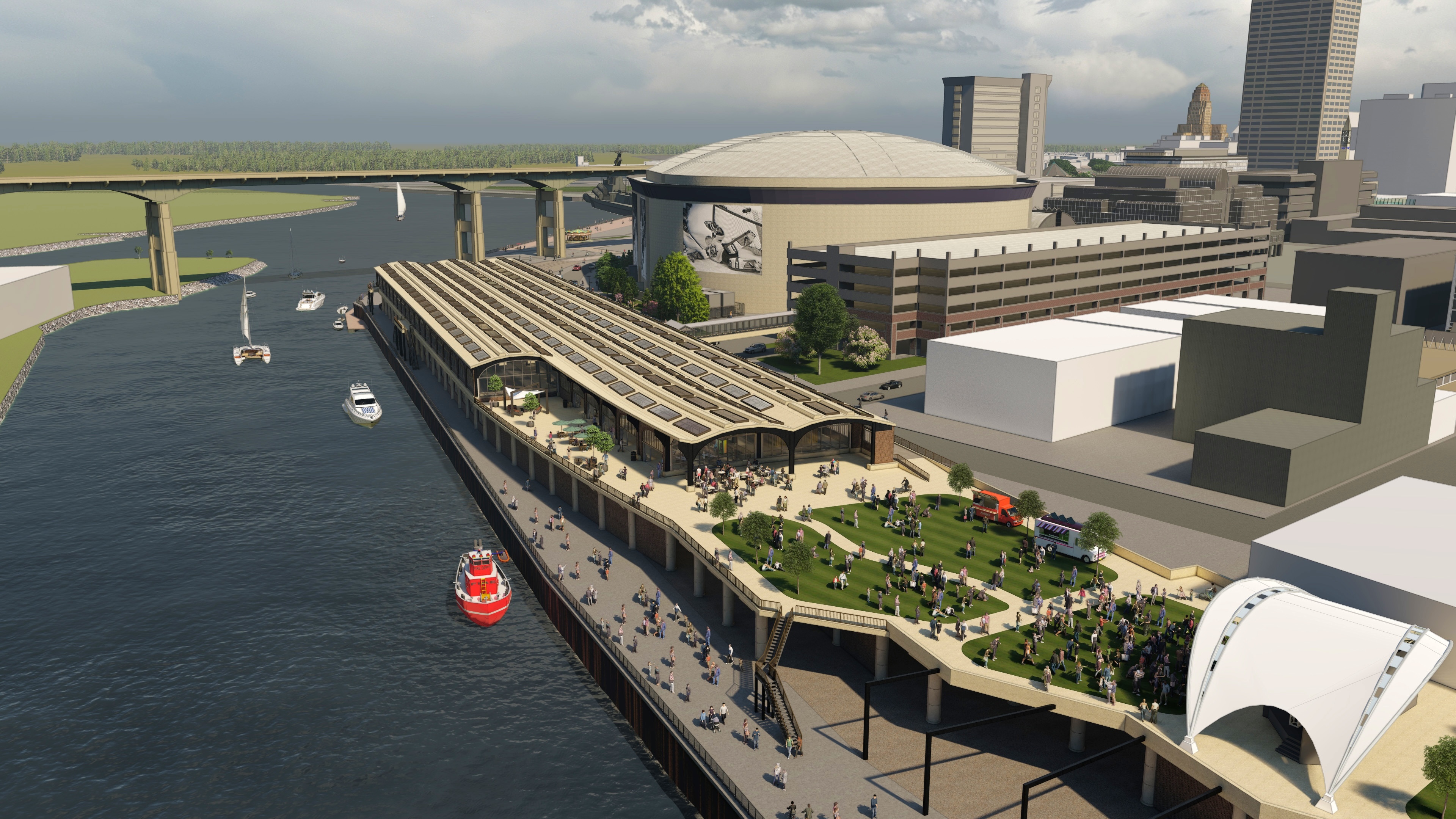
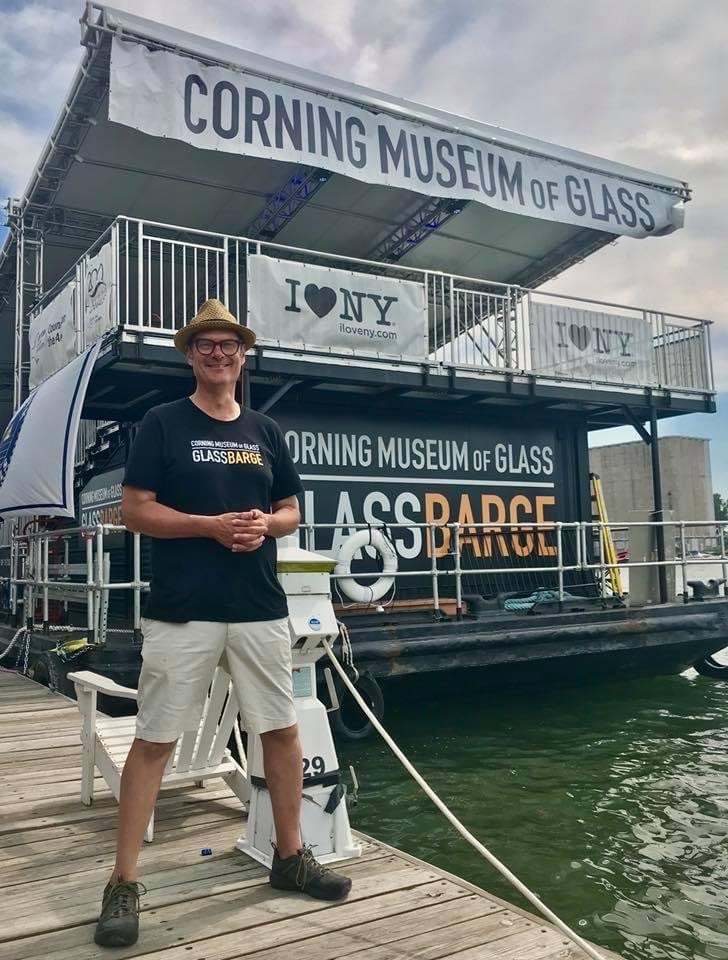
Less than five years after retiring as the Corning Museum of Glass Senior Director of Creative Strategy and Visitor Engagement, Rob Cassetti is getting back into glass, but this time it's in Buffalo, New York. It all started in 2018, when his project to commemorate the historic 1868 relocation of the Brooklyn Flint Glass Works from Brooklyn, New York, to Corning (where it would be renamed Corning Glass Works) took off. Because many parts of the business were shipped via canal, Cassetti wanted to honor the historic move with his “GlassBarge” project, which brought a floating glass hotshop to multiple stops along the canal to celebrate the wonders of hot glass. Among the stops that year was a two-day stint in Buffalo, which awakened his interest in this city, where, after years of decline, things are improving. The city recently turned the tide and saw net population growth for the first time in 70 years according to The New York Times.
“Everything seemed to click,” Cassetti told Glass in a video interview about the stint in Buffalo. His visit left him wondering why a city of this size had no glass facility, and a conversation at a cocktail party two years later set in motion the creation of an all-electric glass studio.
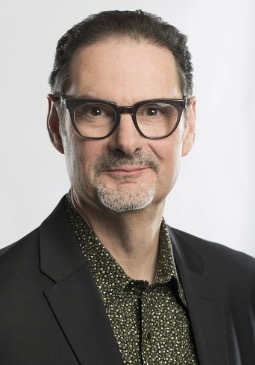
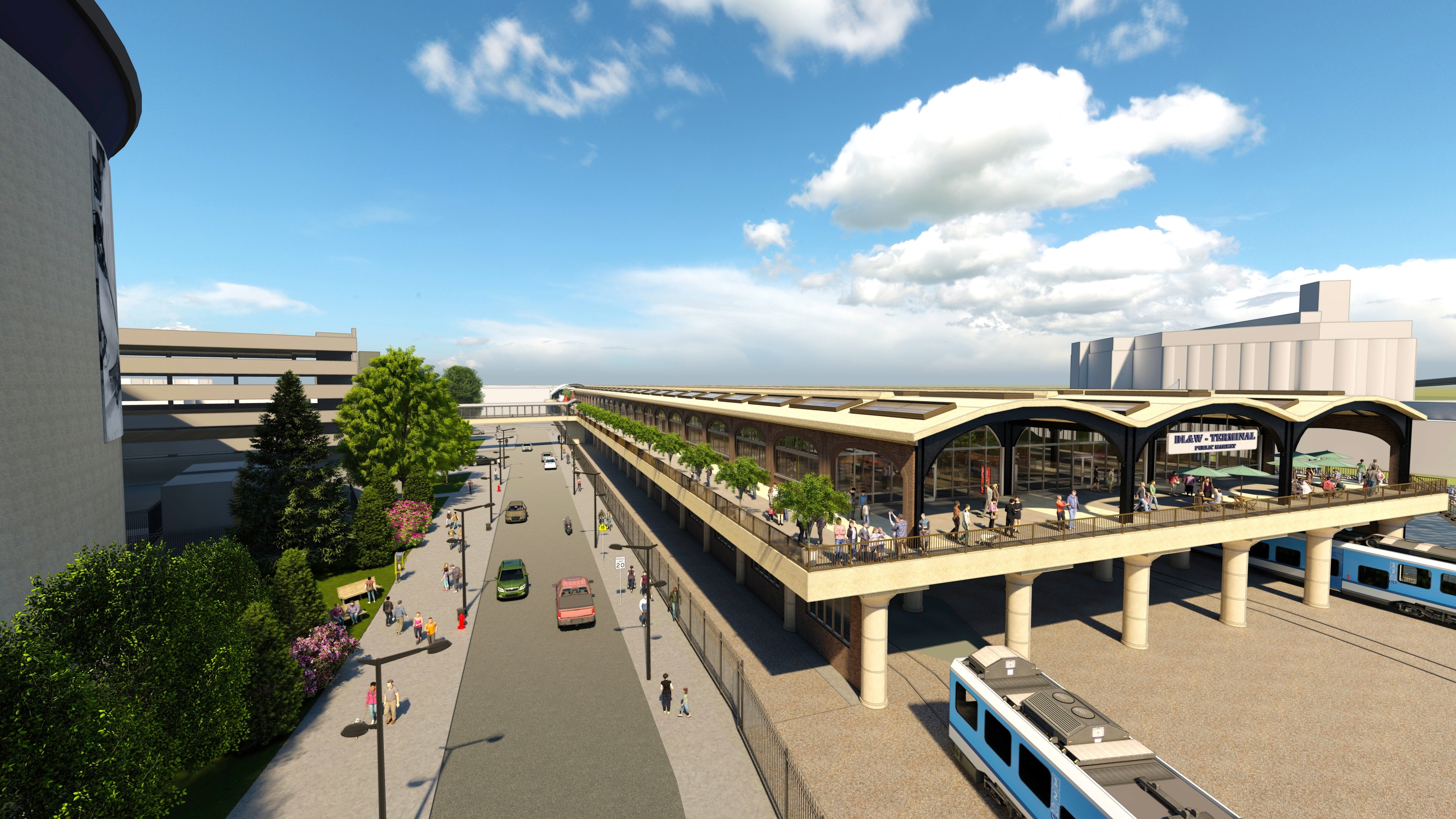
Inspired by the clear interest in glass as evidenced by the crowds who attended the GlassBarge demonstrations, Buffalo Electric Glass will open in the DL&W terminal public market coming in 2028. The DL&W project coincides with Governor Kathy Hochul’s "strategic planning process" for the city’s growth, centered around the Buffalo River waterfront, which is where the terminal is located.
The DL&W project will require a transformation of the second floor of the train station into Buffalo’s premier public market. During the early 20th century, the Delaware, Lackawanna, and Western railroad terminal was a hub for the transportation of people and material goods, and it currently serves as a light-rail station. With this revival of the space, the station will continue to be important to the Buffalo, NY, community as a public space and the home of an all-electric glass studio.
It all started in 2018, when Rob Cassetti and the team from Corning stopped in Buffalo during their tour with the GlassBarge, a mobile glass studio that provides live demonstrations on the water. The two days Cassetti spent in the city with the GlassBarge stuck with him, and at a cocktail party in the Fall of 2025, Cassetti had the conversation that would take him out of retirement. According to Cassetti, “It really planted the seed of Buffalo Electric Glass when we visited Buffalo, so I think of it as the origin moment for this project.” Then in 2025, at a party, Cassetti was speaking with someone about Buffalo, the conversation begged the question, why isn't there glass in Buffalo?
The choice to go electric has practical and idealistic motivations. According to Cassetti, “Buffalo is known as the City of Light, and the design of [the] city flag incorporates lightning bolts. There is both poetry and practicality in our decision to build our hot shop utilizing electric equipment.”
Having retired five years earlier, Cassetti did not imagine himself heading this project. He thought he would help out the people who would actually be doing this. But when it became obvious that “Buffalo Electric Glass should be set up as a not-for-profit and so I’ve got a lot of experience in that, so look, I’ll be the president of the board, I’ll be the interim director as we get this thing set up.” Cassetti’s experience in not-for-profit work and with electric glass equipment makes him uniquely qualified for the job, but he made sure to tell Glass that his tenure in the position will be temporary. The idea is that as Buffalo Electric Glass progresses, he can take a step back. He’s here to get BEG started and put it in the hands of people who will carry it forward.
More than his experience with not-for-profits, Cassetti has been working on electric-powered glass equipment for years. In 2007/2008, the Corning Museum was approached to do glass demonstrations on cruise ships. This posed a pretty big problem, considering the incompatibility of open flames and cruise ships. Bringing a giant oven on board a ship wasn't going to happen. Cassetti and the team at Corning took on the challenge: “My colleague Steve Gibbs and our equipment builder ended up developing the electric furnace, which, there was invention associated with that, but more importantly the electric re-heating furnace, so the glory hole, which is a very difficult problem to solve.” When working on the GlassBarge, Cassetti and his colleagues used the same logic, employing an electric furnace powered by an on-board generator.
What makes electric so appealing in the case of Buffalo Electric Glass seems to be twofold: financial and environmental. “From an ambition perspective,” Cassetti explained, “wouldn't it be awesome to have as green a studio as we could using electric, and financially there looked like there could be some incentives to do it, to help defer the costs of or offset the costs of building it out and then running it on an annual basis.” The idea is that the lower cost of electricity will ease the financial burden of opening a glass studio. Cassetti mentioned that a studio with a greener footprint was something of a dream for him and his colleague at Corning, Steve Gibbs. The benefits of electric seem to keep coming, though, as an electric hot shop is quieter and easier to keep cool.
Buffalo Electric Glass is still in its infancy, still literally on the drawing board. Yet, after attending the 2026 GAS conference in Corning last May, Cassetti was able to generate a lot of interest in what the project would become. Cassetti and the team at BEG are working on recruitment, the technological aspects of building an all-electric glass studio, and the architectural planning, which is already underway. Summing up the current state of the BEG project, Cassetti said, “it's a good idea, we got the right people associated with it, funding model looks good, but you're always anxious, or I'm always anxious for that next level of specificity and you just have to be like.” It seems to all be coming together, with some curiosity about the project already stirring online.