
Blue and Red Flat Storyby Ava Gholson and Justin Ouyang, UrbanGlass’ Summer 2026 Education Interns through the Bloomberg Arts Internship (BAI)
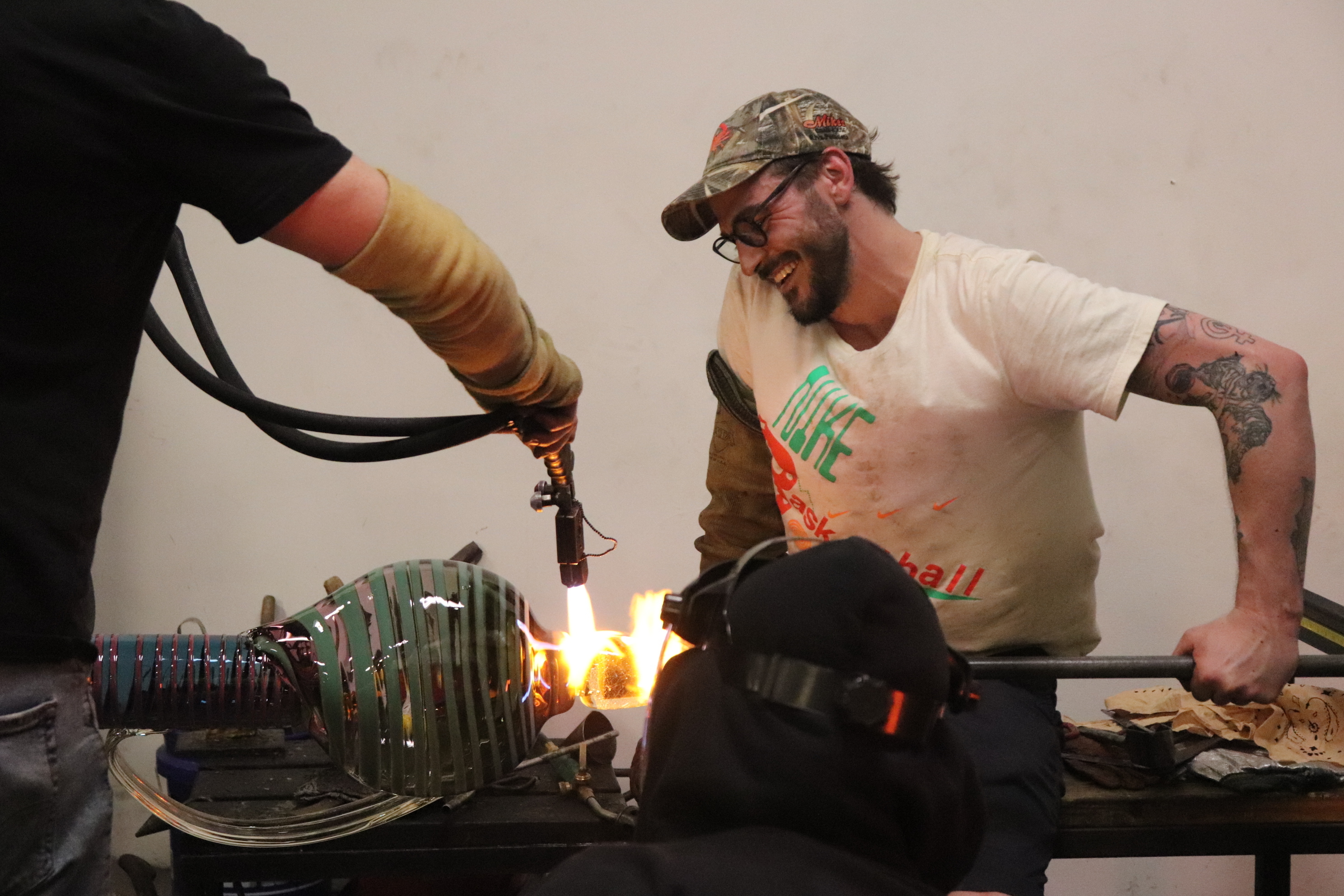
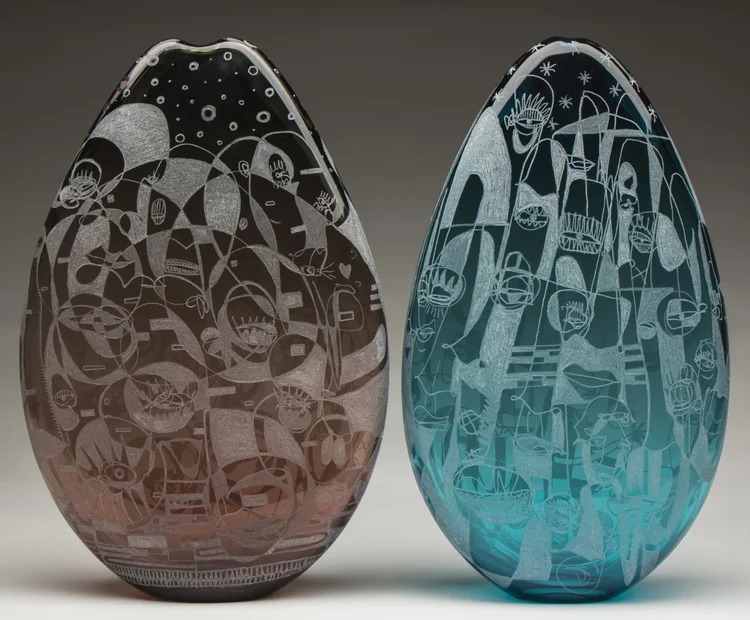
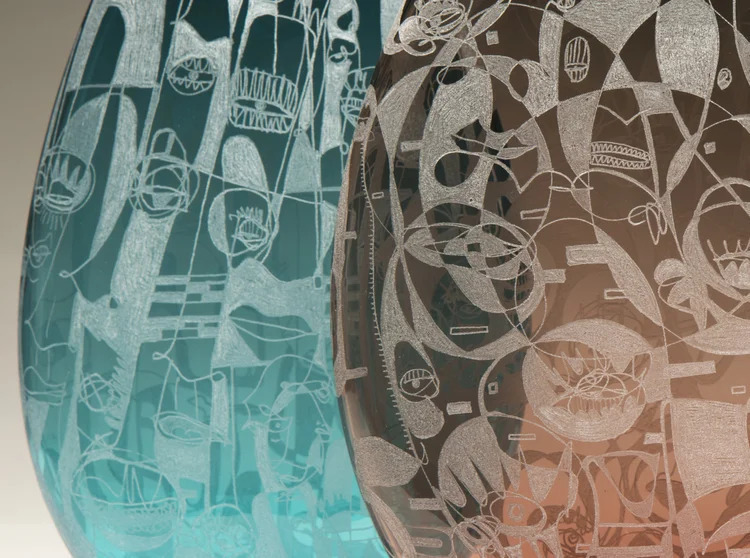
Leckie Gassman is a multidisciplinary glass maker and designer based in Brooklyn, New York. He is known for blending traditional glassblowing and pottery-inspired vessel shapes with vibrant multi-layer color ombres and spontaneous, hand-etched graffiti-style engravings. We had the pleasure of interviewing Leckie after he starred in the Studio Residents Edition of Hot Glass Hangout this past June to celebrate the end of his 2025 Studio Residency at UrbanGlass.
We had such an engaging conversation that went far beyond this page—starting with his decision to pursue art and expanding to the places outside the U.S. that art inspired him to go to.
We hope you enjoy his story as much as we did.
Did you always know you wanted to become a glass maker? Did you have any other interests besides glass?
LECKIE GASSMAN Actually, when I was in high school, I applied only to schools with civil engineering, and I got into all of them. I only applied to one school for art, then I got a scholarship, and my mom was like, “You should go,” and I kind of hated it.
It was difficult, but then it turned out to be the best thing that I've done.
It's ridiculous to go to school for art if you're paying for it because it doesn't really set you up for a job as much, but it does set you up for a perspective or a way of thinking. Even now, within my family. I can see there's a huge difference, and they're trapped in this cycle. Art school teaches you to think outside the box, which I feel in the long run is beneficial.
Do you think having a passion for the arts has made you feel like an outlier to your family or friends?
GASSMAN I'm definitely like an odd duckling in the family for sure, and I think I carry that in my personality as well. I think that is because I am the youngest. I have a lot of other thoughts on being the youngest in this way as well. I have an older sister and older brother and am the youngest, and so my girlfriend now is the youngest, and she has three older brothers, and we have a lot of similar traits.
And there's this kind of imposter syndrome sort of thing, whereas the oldest sibling tends to have this overarching confidence. It's something I think I will always deal with, and it's like, I'm not as confident as I see my older siblings or any older sibling where you can kind of see the confidence. Whereas I’m like “I don't know.” I can't make a decision.
Some of your most notorious work is your etching stories; when and why did you start etching into your glasswork?
GASSMAN I originally just started drawing on glass because I wanted it in my head to have a ‘f—k you,’ And this started when I was in college. For 4 years, I was doing pottery, and as I went on, all these things and the better I did—making a vessel. It was constantly making this “nice” piece.
The more you spend making this perfect vessel, which to you might be perfect, or which someone else might not see as perfect, but once it is seen as perfect, it just sits on a shelf. Nobody uses it, and that messed with my head then. And it messes with my head big time now.
There's this line of how well is it made? What is the experience of using it?
Is it really fun?
How well does it work, you know, and does it break?
Or how long does it last?
Honestly, that is where a lot of the success came from the not-so-much success.
Hearing the, “that's cool piece” and then going“ f–k off, I'm gonna do whatever I think is cool.” And usually what you think is cool to you, which often it's not that cool because to you it makes sense, is not to everybody else because it doesn't make sense to them, and I'm still going back to that now.
It's got to be fun for you.
You don't want to do it just because you have to do it, because then I don't even know if it's worth it.
Are there times, for you personally, that glass feels less of a passion and instead a pull for passion?
GASSMAN There are definitely parts where I felt like I was being extorted.
There are points where gallery owners say things like, “We want this, but in this color,” and you're like, “No, I made it this in this color. This is what I made.” And it's common where it's, “Oh, we love this, but can you make it a different color?” And you're like, “Well, I don't make color. I chose this color, and I made this piece.”
In the art, craft, or design world— there's no difference between them all; they're all kind of the same, but then not—there are a lot of interior designers, and half the work that is made in UrbanGlass is for interior designers, who want it in a specific way. To me, that is less craft. It's less of the making side and more like an actual job.
How do you navigate your craft not only as a passion, but a job?
GASSMAN Selling art is a business. Typically, there is a gallery owner. The gallery owner is the middleman who knows all of these people who have money every year that they spend on art. They usually go to them or go to two other galleries, and if those galleries really respect you or are interested in you, they'll push you, and you know, promote you. And then you'll sell stuff. From there, there's this navigation of price point.
For me, I always want to start kind of low.
You don't ever want to jump too high, because then you're stuck.
You can't back down, and the goal is to kind of build a collector base.
Whether it's small, like with beads. For people that just collected beads, that could be enough.
Right now, if I had someone that collected just one item of my own, it could be 30% of how I make a living here, and that might be two days less I work for someone else, and instead I work for myself. I think a lot of it is that hustle.
Jumping back a bit, you have pursued other mediums of art. Can you talk about your painting career/passion, and what influenced you to take on that medium in addition to glass?
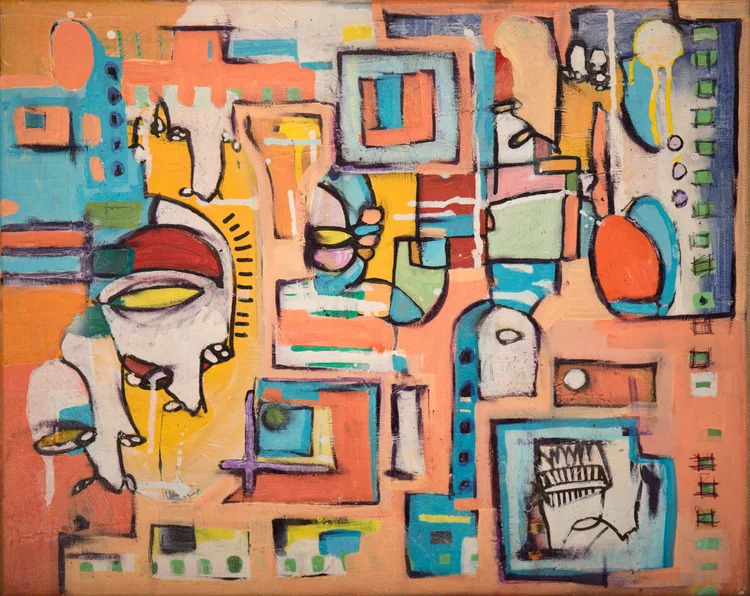
GASSMAN I started really painting after my work in a studio in Nashville, North Carolina. It was a studio that was kind of open to the public. A lot of people walked by, and I would serve beer glasses and talk to the people all day. And it sucked. Then, I would go home and paint. I would paint all the time and still do.
I’d paint because I was upset because I just spent the whole day doing something for someone else. And it was to get this control. I got it; I got something that I'm just doing for myself.
It's for no one.
I wasn't trying to sell it because when an issue arises. You're like, “Oh, someone wants to buy it, or I just sold it. Maybe it should have had a better canvas, or maybe I should be using better materials”
But for me, coming home and painting, it was nice always having something that is almost the opposite of what I was doing. Painting wasn't glass; I could sit there, make dinner, have a drink, or talk with someone.
At the glass studio, it is just very isolated in many ways; despite being in a studio, this hub of a community. Many people see this group of people, and it's so attractive when you're on the outside, but it's also just like any other place.
It looks different, and it is very cool, but it's not everything.
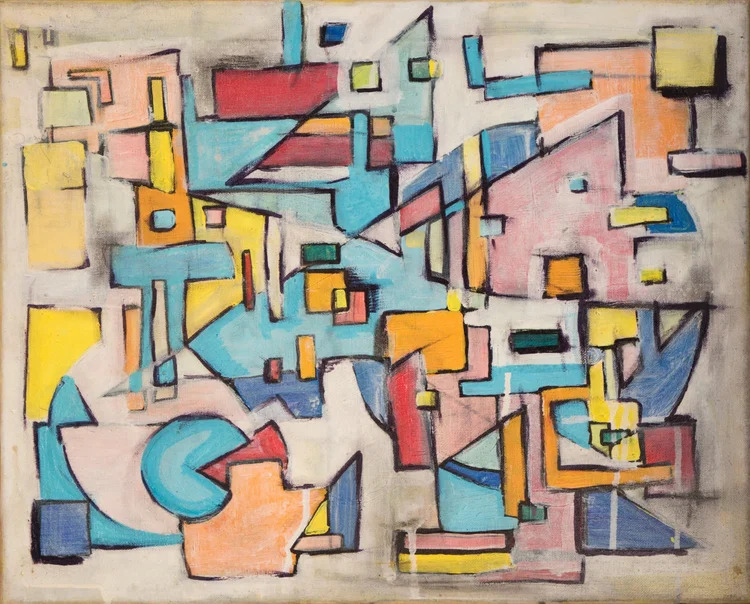
How has your education in ceramics impacted your style in glass?
GASSMAN In all of my work, I'm referencing ceramic form. This is where I came from, and I feel like I stand out learning pottery.
I was forced to learn form in a way that they don't teach in glass, and it has to do with gravity and proportion. Something can look like it's lifting upwards, or it can look like it's sinking, and it can honestly just be like a little tiny lift on the bottom or things like that.
And so the Greco-Roman forms—yeah, I love those. And I love going to museums and seeing those with my mom; how old they are. And they were made by people who didn't even sign them.
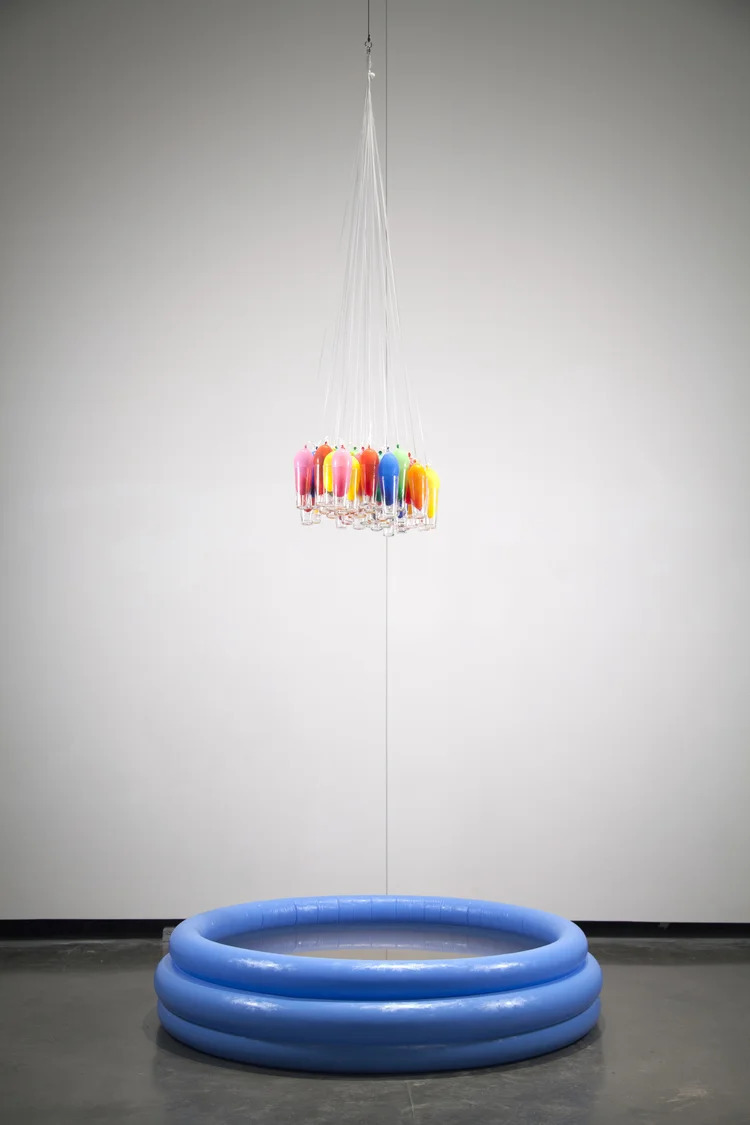
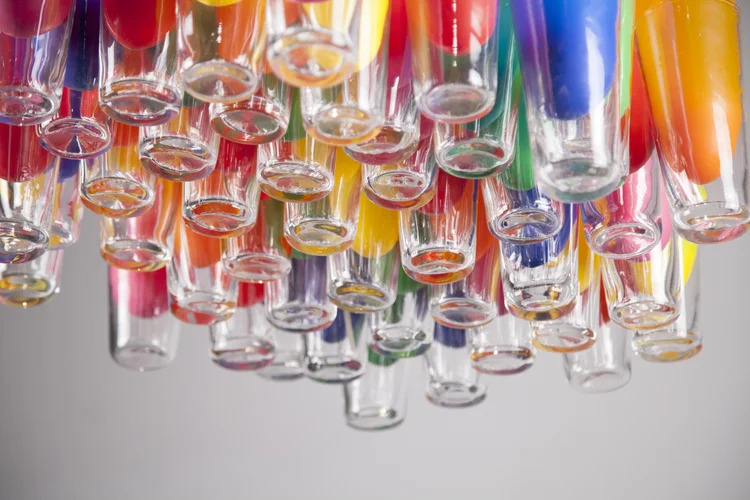
Did that idea of illusion—the lifting, sinking, and proportions, impact your installation Splenda Splendor (2018), where you had this play of gravity with balloons and bottles?
GASSMAN Yeah, that was some of the best stuff I feel like I did.
That's the stuff I would use to apply for grad school. This is stuff I would want to do if I stopped glass.
That was what it was all about, because everything I made was made to be perfect and functional. Then we don't use it, and so that's why. You can't really see it in the photos, but there are the cups with the balloons, and then there's the balloons and the vase with the cinder block or whatever, and then that cinder block with the balloons.
That thing’s connected to another piece that was on hinges. It was a shelf that had a hinge, so as that fell, this thing went up. If it failed, everything essentially would break.
I thought it just made it more fun, and it made it really successful. But to me, that's where I was like, installation is so cool.
Speaking of applying, have you ever applied to any artist-in-residency other than UrbanGlass? If so, can you tell me why you applied to that residency and what your experience was?
GASSMAN There was a residency in Toyama. Toyama is central, and it's a big fishing village. They had good funding for a two-year program for students, and they were all just really excited about glass.
When I applied to my residency in Japan, I had applied to write about how tourism is ruining craft, or rather the effect of tourism on craft. In my head, it was tourism, which kind of like stupifies some of this craft, and so I wanted to kind of look at cast bronzewear, and all of this other art that they had there. I wanted to make artwork. [Editor's Note: The fine grain structure obtained through continuous casting virtually eliminates casting defects associated with static casting methods.]
There was definitely a culture shock. I grew up in the woods in Maryland, and so it was overwhelming to go there. I didn't know public transportation at all, like I hadn't lived in New York yet, so I didn't know any of that. I was 26 or 27 when I did that, too, which is a little close to eight years ago, now. And so by that time, I had just gotten kind of used to driving everywhere. And just to get on the train, and then to figure out where you're going from the train and whatnot, and that's also what made it even better, too, because of the new exposure to that part of Japanese culture.
How did your time in Toyama affect your style? Did you continue to stick to your practice of etching stories or did you explore some new etching styles?
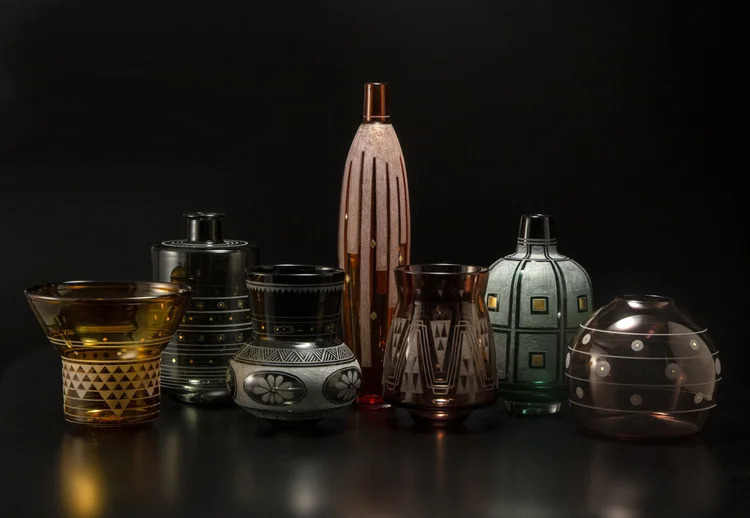
GASSMAN I fell in love with this one particular maker, Kanamori Eiichi, and so I made a lot of work based on his work. And I think I've always been, and still kind of am, not pressured by galleries or through other people. People at galleries are like, “We want the stuff that's engraved with the imagery with the faces, the graffiti stuff.” And that's fun and I love it, but then it's like everybody's asking for that. It started to become not that real anymore, and so I was starting to do a lot of stuff that was just more pattern engraving in Japan, and that's where I was; it just felt nice to do patterns.
What advice do you have for anyone trying to not necessarily try to be a glass maker, but rather trying to find that “thing” that makes them happy?
GASSMAN I think when trying to find that thing, it’s definitely way more exciting when you're like, “Oh, I’m kind of good at this.”
And the more energy you put in, the more something comes out from it. That's how I felt about art my whole life.
And that's where my mom knew me well and was all “You should do this.” I'm grateful for my mom. I think you gotta do what's gonna make you happy because if you're not happy, what's the point? It's not worth it to do things for other people. To make someone happy, even if they're your parents or your loved ones, you have to make yourself happy first. Otherwise, you're gonna carry this resentment.
The younger you are, the harder it is to make that decision, but the better it is to be more courageous about it.
It's hard to be "What makes me happy?”
And “Am I happy because I think this is what makes everybody happy? Is it what I want, or what you want?”
And so the closer you can get to that actual thing. That's magic.